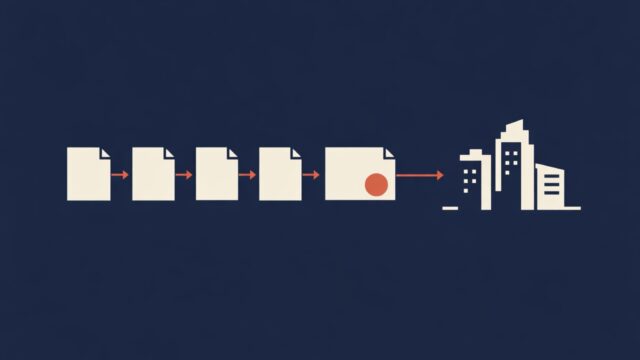
Most Japan market research budgets are spent in the wrong order. A company commissions a report or a survey, and only later discovers that the population figures, household spending data, company registry and sector statistics it needed were published by the Japanese government, free, and in many cases in English.
This guide sets out a sequence: what you can establish from official data at no cost, how to test demand cheaply, where to check a potential partner or customer, and when paying a research firm is the right call. It expands the first step of our Japan Market Entry Strategy. Sources and figures are as published when checked on November 17, 2026.
Step 1: Official Statistics
| Source | What it gives you | Language and access |
|---|---|---|
| e-Stat (政府統計の総合窓口) | The portal for Japanese government statistics across ministries | English site; API in XML, JSON and CSV with a registered account and application ID |
| Statistics Bureau of Japan | Population estimates, the Population Census (国勢調査), the Family Income and Expenditure Survey (家計調査), the Economic Census | English summaries and tables |
| METI e-commerce market survey | An annual estimate of Japan’s B2C and B2B e-commerce markets | Japanese release; the latest edition was published on October 21, 2026 |
| JETRO reports | Trade statistics, economic reports, survey reports and the annual Invest Japan Report | English; PDFs for download |
| Bank of Japan Tankan | The central bank’s Short-Term Economic Survey of Enterprises, a read on business conditions | English summaries; the September 2026 survey was released on October 1, 2026 |
e-Stat is the place to begin. It is managed by the National Statistics Center and has operated since April 2008. Its terms of use state that content may be freely used, copied and modified, that commercial use is permitted, and that the source must be cited. That means you can build a market-size model on government data and publish it in a pitch or a board paper.
The Statistics Bureau publishes the numbers most market-sizing starts from. Its English site listed a preliminary population count of 122.69 million for October 1, 2026, and is releasing results of the 2025 Population Census. The Family Income and Expenditure Survey reports what households spend by category, which is the closest thing to a free consumer-spending panel. The Bureau conducted the 2026 Economic Census for Business Activity in June 2026; the publication schedule for its results had not been announced when we checked.
Two cautions. Older decks still quote a population of 125 or 127 million, so check the date on every demographic figure you inherit. And national averages hide a great deal in a country where the Tokyo area behaves differently from regional Japan, so use the prefecture-level tables when your product depends on density, age or income.
Step 2: Test Demand Before You Pay for Research
Official statistics tell you how many people or companies exist. They do not tell you whether anyone wants your product. Three low-cost checks come next:
- Search demand in Japanese. If Japanese buyers are already searching for your category, in kanji, katakana or English, demand exists and you can measure it. The method is in Japanese Keyword Research.
- Marketplace evidence. Amazon Japan and Rakuten listings show the competitors, price points, review volumes and complaints in your category. See Ecommerce in Japan for how the marketplaces differ.
- Competitor sites and pricing pages. Whether a foreign competitor has a Japanese site, a Japanese entity and yen pricing tells you how seriously they treat the market.
Step 3: Check Companies
B2B research is mostly about specific companies: potential customers, distributors and competitors. The first level of checking is free.
| Source | Operator | What you can find |
|---|---|---|
| Corporate Number Publication Site | National Tax Agency | Search by name, address or the 13-digit corporate number (法人番号). English names and addresses appear only for organizations that registered them |
| gBizINFO | Ministry of Economy, Trade and Industry | Government-held data on more than five million corporations, with an API and downloads. The site is in Japanese |
| EDINET | Financial Services Agency | The electronic disclosure system for securities reports (有価証券報告書) and related filings under the Financial Instruments and Exchange Act. Filings are in Japanese |
Use the corporate number site to confirm that a company exists under the name and address on its business card, which is a sensible check before signing with a distributor. Use EDINET for listed customers and competitors: a securities report sets out business segments, risks and capital spending in more detail than most annual reports.
For private companies, which is most of them, the paid step is a credit report from one of Japan’s commercial credit research firms; Teikoku Databank and Tokyo Shoko Research are the best known. Japanese companies routinely pull these on new trading partners, and you can do the same before extending credit or granting exclusivity.
Step 4: When to Hire a Research Firm
The Japan Marketing Research Association’s annual industry survey, published in June 2026, estimates Japan’s market research industry at ¥277.5 billion in fiscal 2025, up 1.8% on the year. Within conventional research, it puts ad hoc projects at ¥155.5 billion, of which internet surveys (ネットリサーチ) account for ¥86.1 billion, and panel research at ¥78.9 billion. Online survey research is a mature, competitive service in Japan, which is good news for a buyer.
The large firms describe their own scale as follows:
| Firm | How it describes itself |
|---|---|
| Macromill | A panel network of 36 million people in Japan, as of June 2026; online, offline and self-service research |
| Intage | Japan-born and the largest marketing research and insights company in Asia, citing ESOMAR’s 2026 ranking; daily shopping and retail sales data |
| Cross Marketing | Established in 2003; more than 10,000 research projects a year; 14.46 million panel members, labelled “survey panel members with leading global companies”, as of January 2026 |
| Rakuten Insight | Proprietary, double opt-in online panels in Asia and the United States |
These are the companies’ own statements, and panel counts are defined differently by each firm, so do not compare them as like for like. Ask any firm you shortlist how many active panelists match your target, not how large the panel is.
Paying for research makes sense when the question can only be answered by Japanese people:
- Quantitative (定量調査). An online survey to size intent, test price points or rank product concepts among a defined segment.
- Qualitative (定性調査). Interviews or group discussions to learn why buyers choose what they choose, and how they describe the problem in their own words.
- Product and message testing. Packaging, naming and advertising copy, where a literal translation of what worked at home is the usual mistake.
It makes less sense as a substitute for the earlier steps. If official data shows that the addressable population is small, or search and marketplace evidence shows no demand, a survey will tell you the same thing at greater cost.
Briefing a Japanese Research Firm
- State the decision. Say what you will do differently depending on the result. A firm designs a better study around a decision than around a topic.
- Define the respondent precisely. Age band, region, purchase behavior, or job function and company size for B2B.
- Ask who writes the questionnaire. It should be drafted or adapted in Japanese by a native researcher. A translated English questionnaire produces answers to slightly different questions.
- Agree the deliverable language. Decide whether you need the report in English, and whether open-ended answers will be translated or summarized.
- Read the neutral answers carefully. Ask the firm how it interprets mid-scale responses for your category, and prefer questions about past behavior over stated intention.
A Research Sequence That Fits Most Entrants
- Size the population or company base from e-Stat and the Statistics Bureau.
- Check sector context in the METI e-commerce survey and JETRO’s reports.
- Measure Japanese search demand and read the marketplace listings in your category.
- Verify the companies you plan to sell to or through.
- Commission a survey or interviews only for the questions that remain.
- Revisit the numbers each year; population and spending figures move, and new census results are arriving.
Frequently Asked Questions
Where can I find free market data on Japan?
Start with e-Stat, the government statistics portal, which has an English site and allows free use of its content with the source cited. Add the Statistics Bureau for population and household spending, METI’s annual e-commerce market survey, JETRO’s reports and the Bank of Japan’s Tankan survey for business conditions.
Is Japanese government data available in English?
Much of it is. e-Stat, the Statistics Bureau, JETRO and the Bank of Japan all publish in English. Company sources are less accessible: gBizINFO and EDINET are in Japanese, and the Corporate Number site shows English names only for organizations that registered them.
How do I check whether a Japanese company is legitimate?
Search the National Tax Agency’s Corporate Number Publication Site by name, address or 13-digit corporate number to confirm the company is registered. For listed companies, read the securities report on EDINET. For private companies, a credit report from a commercial credit research firm is the usual next step.
How big is the market research industry in Japan?
The Japan Marketing Research Association estimated it at ¥277.5 billion in fiscal 2025, up 1.8% from the previous year, in its industry survey published in June 2026. Internet surveys accounted for ¥86.1 billion of conventional ad hoc research.
Do I need a research firm to enter the Japanese market?
Not at the start. Official statistics, Japanese search data and marketplace listings answer the first questions about size and demand at little or no cost. A research firm earns its fee when you need Japanese consumers or buyers to tell you something those sources cannot, such as price sensitivity or reactions to a concept.
Where to Go Next
Turn the research into a plan with Japan Market Entry Strategy. Measure search demand with Japanese Keyword Research, read the channel landscape in Ecommerce in Japan, and see how business buyers decide in B2B Marketing in Japan.